Downtown Roanoke Vacancies & Revitalization

What Empty Storefronts Signal and Where Opportunity Is Emerging
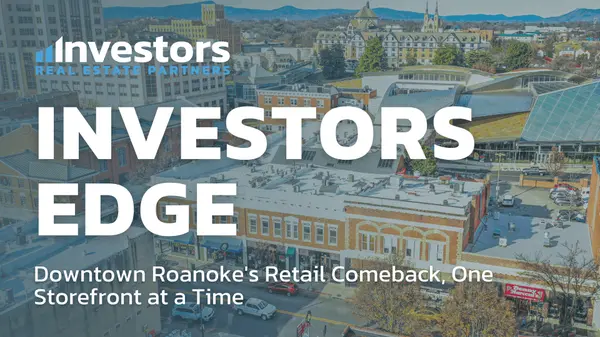
Downtown Roanoke has been the subject of increased public conversation over the past year, particularly around vacant storefronts, business turnover, and the long-term health of the city core. While visible vacancies often draw concern, they also provide valuable insight into how a downtown market is evolving and where the next phase of investment may take shape.
For property owners, investors, and business operators, understanding the drivers behind downtown vacancies is critical. These patterns rarely indicate a single issue. Instead, they reflect broader shifts in consumer behavior, leasing structures, and how downtowns across similar regional markets are adapting post-2020.
Understanding Downtown Vacancy in Context
Vacancy alone does not tell the full story of downtown performance. In Roanoke’s case, much of the current vacancy can be traced to a combination of tenant turnover, right-sizing by small businesses, and changes in how retail and service users approach physical space.
Many downtown tenants historically relied on weekday office traffic and event-driven foot traffic. As work patterns have shifted and consumer habits evolved, some businesses have struggled to adjust their operating models. This has created short-term vacancy even as overall interest in downtown locations remains intact.
Comparable downtowns across Virginia and the Southeast have experienced similar cycles. The key difference between stagnation and recovery often comes down to how quickly space is repositioned rather than how long it sits vacant.
What Is Driving Renewed Interest Downtown
Despite visible vacancies, downtown Roanoke continues to benefit from several structural advantages. The concentration of residential units, proximity to healthcare and institutional employers, and the presence of cultural and entertainment venues all support long-term demand for walkable commercial environments.
Recent investment activity has increasingly focused on adaptive reuse, flexible retail formats, and experiential concepts rather than traditional storefront models. Food and beverage, personal services, and destination-oriented retail tend to perform better when downtown space is curated intentionally rather than leased on a purely transactional basis.
Multifamily development and residential occupancy also play a significant role. Downtowns with growing residential populations tend to absorb commercial space more effectively over time, particularly when daily-needs and service-oriented tenants are prioritized.
The Role of Property Owners and Tenant Mix
Landlord strategy is a critical factor in downtown revitalization. In many cases, vacancy persists not because of a lack of interest, but because space configuration, lease terms, or tenant mix no longer align with market demand.
Property owners who invest in right-sizing units, improving storefront visibility, and allowing for flexible use often see stronger leasing outcomes. Downtown tenants today place greater emphasis on affordability, adaptability, and alignment with surrounding uses.
A thoughtful tenant mix that balances local operators with destination-driven concepts tends to outperform corridors dominated by a single use type. Downtown Roanoke’s opportunity lies in creating complementary clusters rather than attempting to replicate suburban retail patterns.
Implications for Investors and Developers
For investors, periods of visible vacancy often present entry points rather than warning signs. Pricing, lease-up timelines, and capital improvement strategies become especially important in downtown submarkets where transformation is underway.
Investors focused on long-term value creation may find opportunity in repositioning underutilized assets, particularly where zoning and infrastructure already support mixed-use or residential integration. Downtown Roanoke’s scale allows for incremental redevelopment without the cost structures associated with larger urban cores.
Developers evaluating downtown projects should pay close attention to residential density, parking access, and pedestrian connectivity, as these factors increasingly drive tenant success.
What This Means for the Broader Roanoke Valley
Downtown performance has ripple effects across the broader Roanoke Valley. A healthy city core supports office demand, strengthens nearby neighborhoods, and reinforces the region’s appeal to employers and residents considering relocation.
Markets such as Salem and Vinton benefit when downtown Roanoke functions as an active economic and cultural anchor. Conversely, prolonged vacancy without reinvestment can impact perception even when underlying fundamentals remain sound.
The current phase of downtown Roanoke should be viewed as transitional rather than terminal.
What to Watch Going Forward
Looking ahead, several indicators will help determine the trajectory of downtown revitalization. These include residential occupancy trends, the pace of adaptive reuse projects, leasing activity tied to service-oriented tenants, and coordination between public and private stakeholders.
Downtowns that emerge strongest are those where property owners, investors, and municipalities align around long-term strategy rather than short-term fixes. Roanoke’s fundamentals suggest that with disciplined reinvestment and thoughtful tenant curation, downtown vacancies can serve as a catalyst for the next cycle of growth rather than a signal of decline.
For investors and property owners, staying informed and proactive during this phase may prove more valuable than waiting for conditions to fully normalize.
Categories
Recent Posts