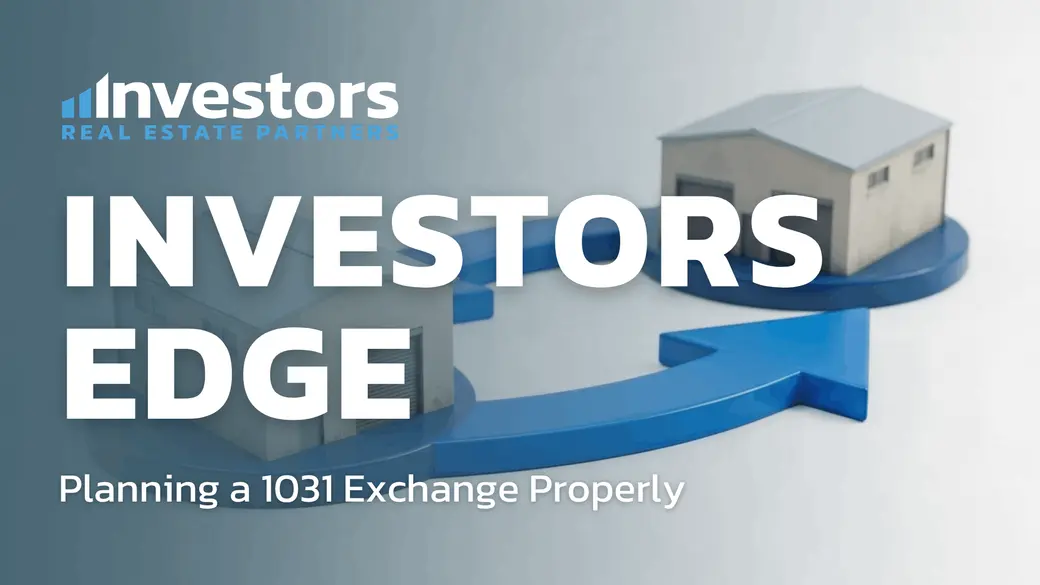
Planning a 1031 Exchange Properly
By the time you're under contract, it's already too late to plan a 1031 exchange properly.
Most owners don't start thinking about a tax-deferred exchange until they have a buyer. At that point the clock is already running, the options are narrowing, and what should have been a clean transaction starts feeling rushed. The mechanics of a 1031 aren't complicated, but the timing is unforgiving.
Here's how it works and where deals go wrong.
1: The replacement property clock starts at closing, not when you start looking.
From the day you close on your relinquished property, you have 45 days to identify potential replacement properties and 180 days to close on one. Those deadlines are firm. The IRS does not grant extensions because the market was slow or you couldn't find the right deal. Investors who haven't identified targets before their sale closes often find themselves forced into a mediocre replacement just to beat the deadline.
2: You cannot touch the money.
The sale proceeds must go directly to a qualified intermediary, a third party who holds the funds between transactions. If the money hits your bank account at any point, the exchange is disqualified and the full tax liability comes due immediately. This is the most common and most avoidable mistake in the process. The QI has to be in place before closing, not after.
3: The replacement has to be equal or greater in value.
To defer all capital gains taxes, you need to reinvest everything. Buy down in price, pull out equity, or leave cash on the table and you'll owe taxes on the difference. This is where deal structure matters, because not every replacement property that looks right on the surface actually works for the exchange when you run the full numbers.
This matters in the Roanoke Valley right now because industrial and investment-grade commercial assets here have appreciated significantly over the last several years. Owners who bought a decade ago and are considering a sale are sitting on real gains. A properly executed 1031 exchange is often the difference between rolling that equity into the next deal at full strength or handing a significant portion of it to the IRS first.
If you're thinking about selling a commercial property and want to understand your exchange options before you go to market, that's the conversation to have first. We work with owners at this stage regularly.
Categories
Recent Posts